Care for Magical Creatures - Lesson #4:Dragon Eggs
Replies

 Good day students, I'm Professor Rosa Pinto and today we will talk about dragon eggs and their characteristics and also a bit about the dragons themselves. As we all should know, dragons hatch from a large egg and each dragon type has a particular egg shape and color. In today's class we will learn to identify some of those eggs.
First we will look at the Chinese Fireball egg which are vivid crimson speckled with gold, and the shells are prized for use in Chinese wizardry. It is stunning and possess the same colors of the dragon itself which is scarlet red with golden spikes.

The second egg we will present is the Ukrainian Ironbelly's egg. Its color is teal with black spikes coming from it, I found it quite artistic and beautiful. This egg is not the same color as the dragon yet the markings could represent the rough and strong scales this dragons possessed.

Lastly I will present to you the Peruvian Vipertooth egg, the surface is smooth with a marbled blue color, it is smaller in size than the previous two eggs perhaps because this dragon is the the smallest and fastest known breed of dragon. To me the egg looks like a precious stone, now these dragons scales are smooth and copper-colored. It also has black ridge-markings, like in the egg, and short horns on its head.

Now what I want for you to do today is to create your own dragon egg and dragon specie. If you can't draw the egg then you can describe it or use images to represent it. The information I would like from the dragon specie that hatches from your creative egg is the following: *species name *color *where is it from *approximate size *what abilities it has, and anything else you want to include.
I would love to see how creative you can get.
Your assignment today includes a short essay question. Please post your answers here behind spoiler tags (if you do not know how to use spoiler tags, please let me know and I'd be happy to help you). Your essay should be 1-4 paragraphs in length the most.
Finishing your assignment correctly would grant you 15 house points! Clever and original entries may get bonus points.

OOH I'm really excited about this one! -gets out coloured pencils-

Goldionis
 This dragon and egg are very unique. Only one baby dragon is born to a single mother every year so the population is very limited. The species is called Goldionis. The dragon itself is a dark golden color and can change to match it surrounding colors if it feels there is a threat. They are typically around volcanic areas around the world. Anywhere you see a volcano it is likely there is a Goldionis around.
They start out very small when first born only about the size of an average human child that goes to Hogwarts. They grow to be about the size of an average airplane. The male Goldionis tend to be slightly bigger than this and the females roughly that size. They have several different attributes outside of their color change ability. They can also let off an interesting humming sound that can put humans, other animals and dragons alike to sleep. They really like their solitude so they are likely to do some hiding or humming to keep you away.


Practising drawing scales
DeviantArt • Instagram • Tumblr • Toyhouse

Miniature Naval Dragon

The Miniature Naval Dragon relates to both the egg color and the primary place it is found. This egg and dragon are different than a lot of species because they possess the ability to live underwater. This is different from any other water creature that is similar (like nessie) because it is really a dragon with gills. The first one was discovered by the British Navy when they were trying to travel to mainland Europe. They thought a bird had dropped her egg in the water--boy were they surprised when it hatched.
These dragons are also cool because they emit a bright blue fire that can stay alight (and burn you!) in the deep sea. The dragons that can hatch from these eggs are usually not as vividly colored as the egg and come in a variety of water type colors such as green, grey and blue. They tend to stay to themselves because of their size--a full grown adult Naval is about the size of a chihuahua. Their eggs are about the size of a galleon and so the parents rely on the bright colors (sometimes they are almost glowing) to find the nest. There are usually 3-5 eggs per season for a mother, but only about half survive because of the other sea life.
They are one species of dragon that the Ministry has had success domesticating primarily because of their size. But beware, they still can be dangerous and are rather expensive. They are considered the diamonds of dragons because of their rarity and price. BUT if you do hatch one, they can be a friend for life.
Dory Broadmoor, Ravenclaw
Dexter by ❤
Lotus Dragon
((Image of dragon is not mine, but I drew and painted the egg))
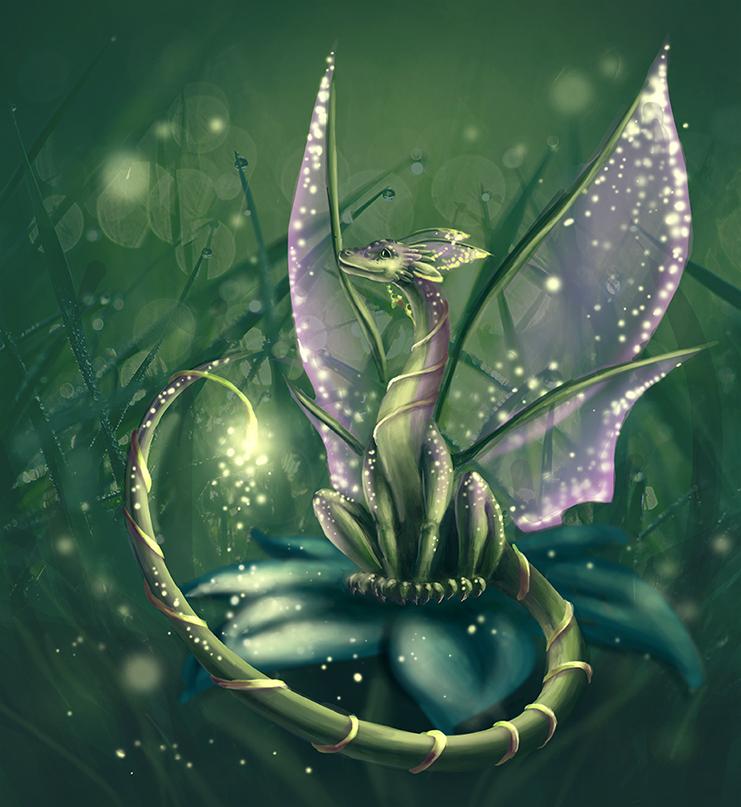 The lotus dragon is a small dragon the size of one's palm. It is found in Japan where it lives on lily pads and lotus flowers. It eats bugs, small fish, shrimp and krill. It's predominately green with purple wings and flecks of gold. It's purple iridescent wings look similar to a dragonfly. It is a fairly peaceful dragon and is known to swim with fish and birds as it if were one of them. It can camouflage itself, changing colours to blend in its environment. Even when it swims in water, which it loves to do, the dragon can disguise itself if it desires. When in the water, it can create whirlpools with its tail. Out of the water it can create steam--which is not just for defense. Another interesting fact is the lotus dragon mates for life.
 When laying the eggs, they are pinky-nail size but enlarge with air and humidity when mother dragon creates steam. Then the dragon's eggs are about the size of tip of the thumb to the knuckle. They are often laid on lily pads. Because of this, it is not always easy to tell if it is a bud or an egg. The eggs are smooth and feel silky to the touch. They also can float. Mother and father dragon take turns watching the eggs until it hatches, which is usually in two weeks.
~Magnus Lee-- Ravenclaw.
European Water-dweller

European water-dweller The water-dweller is a rarely seen dragon. They spend most of their lives scavenging the European oceans floors, lake, and river bottoms. Females lay their eggs ashore or on rocky beddings. The eggs have small swirls. It is believed that the pattern is created by the currents stroking the mother's belly. It is uncommon that the dragons lay more than one egg but it occurs now and then.
The male dragons are slightly larger, darker and spend their time in deeper waters. During the mating season, pairs are formed in river deltas. Out of the water, the dragons are slimy and their scales shimmer iridescent green in the light. Witches and Wizards can spot them while diving. They don't feed on living prey, but when feeling threatened, they are very dangerous. They have enormous claws, splinter fine teeth, and a very powerful tail.
Ylva Blackmane, Ravenclaw Egg drawn by myself
DeviantArt • Instagram • Tumblr • Toyhouse

The Hawaiian Rainbow Sky Singer by Lysandra from Ravenclaw
The Hawaiian Rainbow Sky Singer
Only native to the island chain in the Pacific Ocean, the Hawaiian Rainbow is not only utterly gorgeous and rare yet also a benign dragon creature. The species visits the whole world yet after finding a partner, they always return to the Hawaiian Islands for rearing their offspring. The Rainbow Sky Singer chooses its mate for life. The male courts the female for weeks, singing marvelous songs for her which talent contributed to the name of the species. After a brooding period of 18 month, the nests consists only of one egg, hence the rarity of this dragon. Both mother and father take turns at hatching the egg, which can take as long as 12 weeks. The single egg is rainbow-colored and seems to slightly glow from within. The size can be compared to the average ostrich egg. The shell of the egg reminds a bit of precious stones and left-behind pieces are collectibles in demand.

When the dragonlet is born, it´s very small compared to other dragon species, often only two times bigger than the average lizard. The family lives in harmony and the dragon young stays with its family for a minimum of 2 years. Afterwards, the youngsters often decide to go globetrotting in flocks of even-aged Rainbow Sky Singers. They don´t mate before they reach an average age of five years.
The fully grown Hawaiian Rainbow reaches its magnitude at an age of four years. It shows a delicate head with rainbow-swirling eyes and a short and sturdy dark gray body with a tail three times long of it. Only the body is covered with glittering scales, the wings are more like very solid transparent butterfly wings which glimmer in all the colors of the rainbow when sunlight shines on them and dulls down to a mute spectrum in the moonlight. The height and length of the average dragon of this species is comparable to a lion with a wingspan of two meters and its life span tends to settle around 150 years. The usual diet consists of vegetables, fruits, nuts and dew drops.
The Ministry of Magic classifies this dragon breed as only XXX because of its docile nature. When trained by the right tamer, this dragon is quite affectionate and seldom spies fire, only in situations of dire circumstances or danger. If these dragons are really bonding with their trainer and the wizard in question is skilled in telepathy, the Hawaiian Rainbow allows communication over this medium. However, not much is known about the really wild creatures which live unbonded and you should always be aware of the strength, determination and skill even of the smallest one.


Aisling Dearcan - Ravenclaw

This is the egg of an Irish Clover dragon discovered in the fourteenth century. When hatched the young dragon is a pale green. As it grows older it's color tends to darken and it ends up being a beautiful emerald green color. Hatchlings are no bigger than small dogs. They start out weighing about 5 pounds but very quickly they grow to weighing more than 100 pounds. For a dragon though, this is very very small. They do not usually have any special abilities, Though it is said that they do sing and if you manage to hear one singing, it is life changing. Their song is so inspiring that the few humans who have ever heard one sing have become the most motivated and inspiring people ever to walk to the Earth. It's believe that Taliesin heard one sing and that is why he is one of the most well known bards of all time.
(( In case it isn't obvious, the egg is my own creation in photoshop ))


Lucky Water GodToru | Hufflepuff

The Lucky Water God is an ancient breed of dragon that has only just recently been recognized by the wizarding community. Their recent discovery as dragons had been hidden for ages having been misidentified for so long due to their physical similarities to a seahorse, size, and their amazing camouflage abilities.
If the Lucky Water God isn’t feeling threatened or scared they appear to be a crystal blue color with sapphire colored spines and fins. Their stomach plating is a warm sandy color as a contrast. However, they have the magical ability to become completely transparent as a defense mechanism, similar to another Asian Magical Beast – the Demiguise. Unlike their seahorse substitutes, Lucky Water Gods do have tiny reptile scales as opposed to a seahorses’ membrane stretched over their bony plates. Unlike most dragons, their scales remain soft and penetrable, which is why they rely so heavily on their defense mechanisms. The Lucky Water God cannot breathe fire like their other aquatic cousins the Miniature Naval Dragon (), but instead shoot a very powerful stream of water from their pipe-like snouts that can stun predators as large as 10x their size! They are primarily herbivores, but are considered opportunistic eaters and will eat meat when presented such as small fish or krill.
Where the Peruvian Vipertooth is known as the smallest known land dragon, the Lucky Water God is the smallest breed to date. Adults average at full grown length of only 3 inches. Hatchlings are no bigger than a droplet of rainwater!
They are located in Asian waters but primarily the Sea of Japan. They were worshiped by ancient people of eastern Asia for luck and blessings. There is even a Chinese myth based off them (though seahorses got all the credit). The myth basically states that all seahorses are dragons, and only through blessings from gods or for accomplishing an unattainable goal do they grow to the size of a traditional eastern dragon (like the Chinese fireball!). Little did these ancient people know, they were actually worshiping real dragons all along!
(OOC: SO MANY CUTE DRAGONS!)

come do this
I has draggys. Pls help me clicky them! Dragon Cave

Dire Demonwing Essay by Chell Belliveau (Ravenclaw)
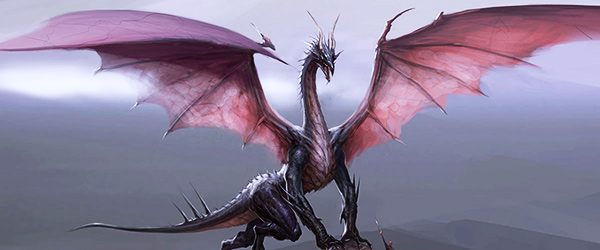
A fearsome and formidable creature, the Dire Demonwing lives high in the alpine European Alps, preferring the cozy lair of an abandoned castle or fort if one is available. With a massive wingspan on 75 feet, flying is their greatest pleasure. Despite their ferocious name - given to them by an arrogant medieval knight who didn't care to understand the beast, only to slay it - the Demonwing is quite peaceful in nature.

Aurora Flynn, Hufflepuff
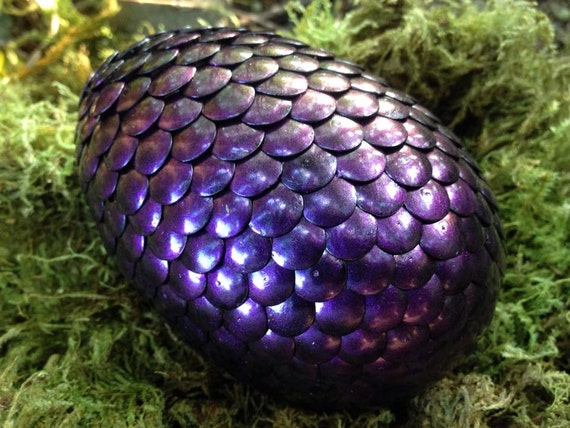
Eggs of the Peruvian Rockhopper differ in pattern and lustre based on the preferred habitat of its mother. Whilst all eggs share similar size and shape (on the smaller side, featuring a wider base that allows stability when laid in precarious sites), some of the varying patterns include those reminiscent of rocks and minerals such as sandstone, granite and opal. Once hatched, the offspring are already close to their adult size - they are small and agile for ease of darting about steep mountain slopes, with a small wingspan that is believed to only be used in the infrequent event of slippage.
As the name suggests, Peruvian Rockhoppers are native to the mountain ranges of Peru. Their movements are sharp and calculated, generally keeping them safe from capture and allowing them to navigate rocky slopes and cliffs with ease and speed. Due to the barren nature of their preferred habitat, most of their nutrients are extracted from minerals within the rock. This phenomenon is not well understood, but it is believed that the unknown gas they breathe is able to penetrate and dissolve rock!
Fully-developed dragons will all exhibit similar appearances (opalescent grey scales) regardless of their egg pattern, however, evidence of their mineral of origin can still be observed in the form of small crystals embedded within their scale matrix. Depending on their mountain range of residence, adult Rockhoppers may or may not be camouflaged. They prefer to remain as still as possible in direct sunlight and as a result can be relatively easy to spot, however, their incredible speed and twitch-like muscle response has rendered their study rather difficult.

I'm off work this week so I'm going to try to get started on my egg and maybe some of the other lessons. Scales are going to be a new challenge for me too. c:
[edit]
I really wanted to crochet a scaly egg for this, but I've been swamped between work and my new commute.
Parker Lange, Slytherin
The Korean Killfire is a dragon species with a lethal flame. Its hide is scaly and oil-slick black, with iridescence that helps distract and confuse its prey. These dragons breathe a purply white fire that kills on contact. It burns the hottest of any dragon species. For this reason, people avoid the highest summits of mountains on the Korean Peninsula where nests are commonly located. The Killfire’s wingspan reaches an average of 50 feet.
Eggs are scaly, coral, and flecked with an iridescent sparkly mineral.


Flaring Filipino

This dragon species is native to the Republic of the Philippines, with their first appearance on the small secluded island of Ingalan - but the dragons have spread over the whole Republic. The egg of the Flaring Filipino is mostly coloured in a radiant blue with speckles and a band of turquoise ornaments on its top. A very striking feature is the azure-blue flame on the egg which actually flickers as if it was a real, warm flame. Unfortunately, this makes it easy for the egg to be spotted by poachers who either try to sell the dragon egg itself of are in for the turquoise ornaments, which are as hard as diamond. It is interesting to note that if the ornaments are removed (either by force or by a spell), irreversible damage is done to the dragon baby inside which causes its life to end. This led dragonologists to believe that the ornaments do contain some essential nutrients the dragon baby needs to grow and feed on. The Asian Ministry of Magic does their best to keep these dragons safe and undisturbed and their politics have proven to be very successful as the population is striving.
Once full-grown, the Flaring Filipino is coloured in a deep seagreen, resembling the turquoise ornaments of the egg shell. Some dragonologists assume there's a connection between these factors, but there's no proof yet. The whole body is covered in tiny scales which function as a precise protection against spells and battles with other dragons(if necessary, see explanation on temper down below). The Flaring Filipino has a resemblance to most Asian dragons, especially those of Chinese or Japanese origin(see Chinese Fireball for comparison), which led witches and wizards to believe they actually originated as a cross-breed many years ago. A significant long, black fur on the dragon's back and cheeks supports this theory, as well as the small barbles. They feed exclusively on fish and birds (even birds of prey - studies have shown they favoured an osprey over a pheasant) and can dive a little, but not too much. The claw on its hind legs is similar to the claw of a velociraptor, a dinosaur that existed approximately 75 to 71 million years ago. It is unknown if these species are related. The claw proves useful for hunting fish and the eating process. The fire this dragon produces is of the same azure-blue the flame on its egg is, which earned this species the nickname 'Azurian'. Though this dragon is remarkably calm and reserved, is non-aggressive and gets along well with others of its species, it has a undisputed love to breath fire while flying with such joy. Luckily, these dragons do soar in a height that make it difficult to be seen by Muggles and if they see them by accident, it's more likely that the Muggle will be thinking it was simply an illusion, like a flicker of sunlight or a shooting star.
As already stated, the Flaring Filipino has a very calm nature. No accident with a human (either witch, wizard or Muggle) has ever been proven. In fact, these might actually be one of the tamest dragons one could ever meet, but this doesn't make them boring. They're faithful and understanding and do well with humans - which led some dragonologists to make some studies on keeping these as pet dragons. Given their delicate size of being only 3 metres high and 4 metres long(the wingspan being 4 metres as well), the Azurians could acutally blend in well. The studies also proved that these dragons tend to establish friendship with humans as they do seem to enjoy their company. However, this is still a project which is in the early stages of development. Interested people are advised to contact their responsible Ministry of Magic(or the equivalent in their country) to see if their home country is participating in this project. (Unfortunately, Britain isn't one of these countries yet.) Purely hypothetical, the witch or wizard has then to fill out an application of care, then travel to the Philippines to study the wild Azurians there. Weekly reports are a requirement. After 6 months of dedicated studying, the witch of wizard will be able to pick a hatchling (born by already domesticated dragons!) and care for it and report daily. As of now, the hatchlings are made infertile with a spell to prevent uncontrolled breeding. With another 6 months passing by, the future owner has to take a final test before she or he can take the dragon back to where they live. Travel is supported by portkeys and/or very experienced, hand-picked Ministry workers who excel in side-by-side apparation - to prevent Muggles from seeing the dragons and possible splinching.
Elizabeth Amalia Covington ~ Slytherin (image obviously drawn by me - please drag and drop for a bigger view)

nicola stromwing Hufflepuff
 The Cavern Dwelling Acid Spitter
Native to Pacific islands where the ocean has carved out caverns. They lay their eggs in the water and then the eggs float for months or years until conditions are right for hatching. No creature eats the egg, not only is it nearly invisible on the ocean but nearly indestructible and terrible tasting with an acidic burn to the touch.
The Cavern Dwelling Acid Spitter
Native to Pacific islands where the ocean has carved out caverns. They lay their eggs in the water and then the eggs float for months or years until conditions are right for hatching. No creature eats the egg, not only is it nearly invisible on the ocean but nearly indestructible and terrible tasting with an acidic burn to the touch.
The egg is shown actual size in the image. Fully grown, The Cavern Dwelling Acid Spitter is roughly 3 meters long for the female and 2 meters long for the male. This is a very lithe and slender dragon.
Colors range from white to blue over the body. The acid they spit is mostly for defense or making the caverns they live in more comfortable for themselves. It is best not to provoke them.

Niamh Doyle, Gryffindor
 This is the Lesser Spotted Egyptian Dragon, which (obviously) originally came from Egypt. The dragon itself has a similar colour to the egg, with the main body being yellow with spots and patches of orange and red. The distrubution of these spots is unique to each individual dragon, much like human fingerprints. The dragon's tail has varying numbers of red rings around it - the more rings the egg has, the more rings the dragon will have on its tail - and the more rings, the more powerful the dragon is.
It's a surprisingly small dragon, standing at just a metre tall (so shorter than me). However, what it lacks in stature, it makes up for with its fiery nature - Lesser Spotted Egyptian Dragons are terrific fire-breathers, and some Egyptian wizards have even tried domesticating them in order to make the most of their ability with fire. It's not to be recommended though, as apart form being illegal, the dragons have no desire to be domesticated, and have burnt the wizards' houses down.

My CW shop ~ forumset by [/font]

Keet Arlie, Ravenclaw

The amethyst snoozle is a small, songbird sized dragon. In fact, it even somewhat resembles a songbird. It has a beak-like snout, and a feathered tail tip and wings. True to its name, the amethyst snoozle is vivid purple, with feather tips that appear to have been dipped in gold flakes. These small dragons reside and nest in tropical rain forests, where their jewel-bright eggs actually blend in with the native flora. Their eggs are colored similarly to their scales and plumage; they are a piercing violet, with deep purple swirls and gold speckles.
Snoozles are very timid creatures that prefer to avoid contact with big scary animals, like humans. Instead of breathing fire, they actually breathe out a golden hued sleep dust, that puts any threatening creature to sleep long enough for the snoozle to escape. Conveniently, the dust also makes the sleeping creature forget that it ever saw the snoozle. Due to its unique defense mechanism and secretive nature, few humans have actually seen a snoozle, or remember seeing one. Indeed, they must be observed with omnioculars from a considerable distance, so as not to startle the creatures and trigger their defenses.
Dragon egg and dragon were illustrated by me. :-)


Sauvage Chevaux / Hufflepuff
Terra Drako (Latin for Earth Dragon)
The egg forms naturally over billions of years as the ground compacts in on itself to form concentrated earth. Eventually, much like a plant born from a seed, the dragon sprouts from its egg. It can take generations before the dragon ever reaches the top crust of the earth, for its home is the dirt and its friends and the small creatures that thrive within it. Since the eggs forms underground and the dragon does not breach topsoil until long after that, there is no way of understanding what the “egg” may look like. Many wizarding scholars simply refer to it as a seed or a pod nowadays.
There has been only one confirmed sighting of Terra Drako and it was over two hundred years ago in Madagascar and that was near the end of the found dragon’s life.It was described as looking brittle, like clay as it dries up in the sun and gently crumbles apart in the wind. The body was flat, so as to stay low to the ground and wide, covering a large amount of terrain at one time. One could easy wander for a whole day on the back of a Terra Drako and not know it, for the trees and shrubs the sprout from its back are like the terrain in which it thrives. The Terra Drako is a master of camouflage and illusion. The dragon found in Madagascar was
It is argued whether or not the Terra Drako should even be classfiied as a dragon, seeing as how it does not have wings. However, as far as characteristics go the Terra Drako checks every other requirement. The greatest personality trait of a dragon is guardianship. Or, the urge to protect - be it treasure, hatchlings, or their land. The Terra Drako represents the ultimate form of protection as well as nourishment, for its body (once decimated) returns to where it was born and with it brings newfound life to the home it was born.
It is estimated that the dragon is birthed by truly thriving and singular forests, potentially worldwide. The dragon’s life is synonymous with the life of its mother forest. The idea is that the Terra Drako acts almost like a Horcrux to the forest, so if/when its existence is ever threatened, the dragon dies and returns life to its mother. In a sense, the dragon lives to give its Mother Forest and second life when the time comes. What the dragon does for so many years until that point is still being speculated. It is a concern, though, that many of these questions may never be answered when considering the current state of the environment today. Likely, any Terra Drakos that were alive have already been absorbed back to their home. Although there is hope, there is much doubt that the current state of the world can provide the concentrated nourishment it is believed necessary to form the Terra Drako.