Astronomy Lesson #5: Meteor Showers
Filter
Show Official Posts OnlyReplies

This lesson contains an ESSAY QUESTION assignment.
[img align=left]https://sapi.subeta.net/shared/356918.png[/img]Good evening students. Today we are covering meteor showers. Which I find absolutely thrilling. Meteor showers, for those who don't know, are when meteoroids or space rocks enter the earth's atmosphere. The resistance of the air causes it to get extremely hot. Thus we see what people call "shooting stars." The bright part is in fact the air behind the meteor, not the rock itself. So a meteor shower is when you have a whole bunch of them at one time. Think of how old those rocks must be? And of course they are so gorgeous too.

Your assignment is to write an essay explaining how we get meteor showers in your own words. Please also share an image of a shower or video and describe what looking at it makes you feel. Your essay will be graded out of a maximum of 15 House Points. Your essay should be in your character's own words. Bonus points may be awarded.
If you don't have your house on your essay, there will be no points awarded. If you have any questions, need clarification or help please feel free to ask.

Chell | Ravenclaw
The earth moves in a nearly circular orbit around the sun. Meanwhile, comets slowly disintegrate and leave behind a trail of debris that follow their elliptic orbit. A meteor shower occurs when the orbit of the earth intersects with the orbit of a comet, and the debris enters the earth's atmosphere. This is why meteor showers associated with specific comets occur at roughly the same time each year; it is the time in which the two orbits overlap. Meteor showers are visible to the naked eye due to the particles of the debris being heated to the point of incandescence via air resistance as they are drawn in by the earth's gravitational field. However, most of the time the particles burn up before they actually reach the ground.
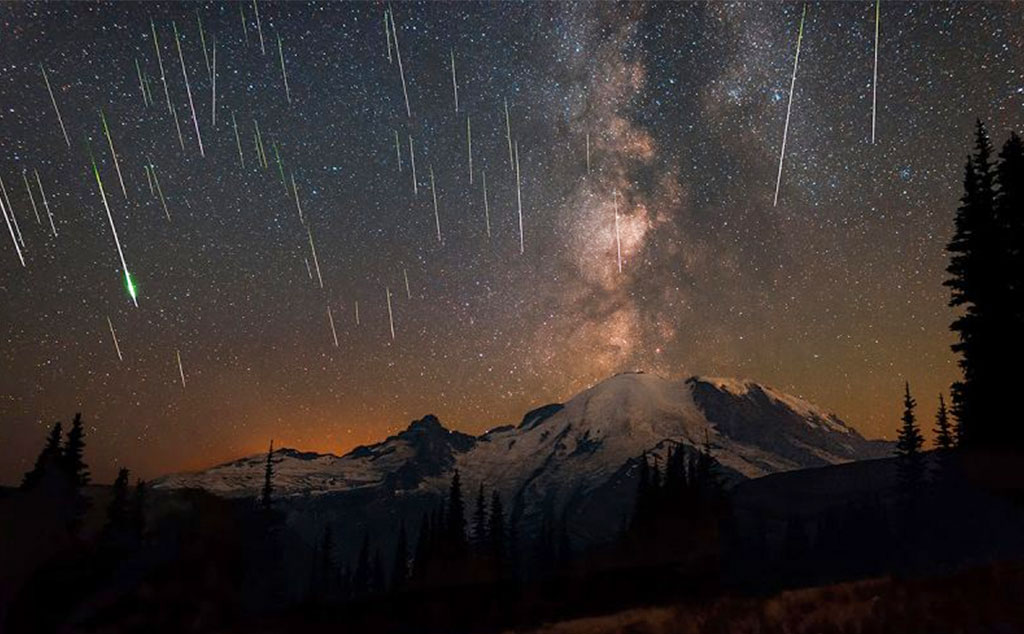
I chose this picture because I liked the way the shower contrasted with the mountain. It appears to be taken somewhere with very little light pollution, allowing the sky to be lit up with stars. It kind of serves as a reminder that even in the darkest of times, you can find light. There's always a bright side to things!

Elizabeth Amalia Covington ~ Slytherin
There are single meteors, but then we also have meteor showers. They are an accumulation of shooting stars(eg meteors) and happen in certain times and originate mostly from terminated planets. The orbits of these small bodies run almost parallel in space and therefore seem to come out of a radiant point in the sky.
Meteor showers can occur when the Earth is approaching or crosses a comet's path as it travels around the Sun. Near the sun, comets constantly lose part of their mass in the form of gas and dust (comet tail), pieces of rock and other small particles called meteoroids. Over the course of thousands of years, they are distributed over the entire orbit of the comet, which is why a meteor shower usually reappears annually at the point where the earth passes through the area of this cloud of matter. The strength of a meteor shower is expressed as the Zenithal Hourly Rate (ZHR); it is the hourly number of meteors visible to the peak under ideal conditions.
As a rule, most of the shooting stars can be seen in the early morning sky in the east - just before dawn - because the observer then "turns" towards them as a result of the earth's rotation.
2016 Perseid meteor shower over Noble Canyon
I love the stars and the sky - especially the night sky. It's so beautiful to look at. I chose a video because it pictures the way of the meteor showers on the sky in the best way. Such a sky makes me very peaceful and problems appear a lot smaller than they are. A glance into the night sky with meteor showers (or even just stars!) is like a therapy because it's so calming.

Not sure if this will actually count for points, but I wanted to stay true to my character and dig up some mischief where he would see the opportunity.
Jona Fletch / Hufflepuff
 Generally, a meteor starts by turning on the "HOT" water knob then slowly adding "COLD" water until it reaches the perfect in-between temperature. It depends on the meteor; they may shampoo and conditioner or just use a good old two-in-one. On average, a meteor's shower can last anywhere from 7 to 32 minutes, depending on whether or not the meteor's roommate tried to use the toilet at the same time. After rinsing any and all suds from their body, the meteor than towel dries and gets dressed for their day.
Looking at such a scene makes me...uncomfortable. Why would I want to watch anyone shower, let alone a meteor doing it? I feel dirty, despite it being such a clean image, and defiled. This might be the weirdest Hogwarts assignment I've had to do yet.

Lysandra from Ravenclaw: Showers of Hope
Every so often, in an especially clear night, you can see traces of bright lights in the sky.
They appear in the twinkling of an eye and are only visible for a second to the unaided eye.
These lights are called meteors or shooting stars.
They are created by dust particles from comets which burn out at an altidute of 62 miles in the atmosphere. If you are favored by fortune you are able to see a handful of sporadic meteors per hour, most frequent in December, January and August.
However, a few times a year, Earth is traveling through a dust trail which was left by a comet path and this very condition leads to the creating of a meteor shower. Meteors of one shower seem to originate from the same point called the radiant. The comets who produce the meteor showers come a long way from the Oort Cloud or the Kuiper Belt and are icy remnants of the genesis of the outer planets. They consist out of frozen gas and dust and warm up when their paths converge to the sun. The rising heat unleashes gas and dust before the comets vanish into the dark again. So a billions years old creation process still bestows beautiful light sights on us until today!

This is a picture of a Quadrantids meteor shower which shows up on the January sky quite often this month. It is one of the heaviest meteor showers we can watch at the beginning of each year. Looking at this, I feel hope and love. The little falling stars remind me of all the wishes people make when seeing them and all the positive feelings which go with them. I hope every one of them creates a shower of love for the people wishing and so every meteor shower has always some kind of supernatural atmosphere for me.


Nicola Stronwing- Hufflepuff
We wish on them, we fear them, we love them. Falling stars in the form of meteor showers are usually from the Earth passing a debris field and the debris, meteors, buring up in the atmosphere. The debris fields are usually leftby a comet's trail and when the little bits space dust and rocks come into contact with the atmosphere they burst into light trails that we human see as shooting stars.
 The streaks of light coming toward the watcher in hundreds or thousands are so very impressive. Looking at meteor showers, or images of them, makes me feel awe at the universe and the way the grandest of things can be simply explained without taking away from the glory and emotion of viewing the spectacle.

hollynd atwood, slytherin
A meteor shower occurs on Earth when the planet's orbit crosses paths with a comet's orbit. The glowing hot air from the resistance of the space matter falling through the sky can become apparent when the debris from a comet encounters the Earth's atmosphere. Meteor showers happen around the same time annually because of the Earth's intersection with specific comets such as Comet 55P/Tempel-Tuttle (Leonids) and Comet 109P/Swift-Tuttle (Perseids). Major meteor showers are the Quadrantids in December/January, Lyrids in April, Perseids in August, Orionids in October, Leonids in November, and Geminids in December.
This video reminds me of the vastness of space. It makes me want to make my mark here on Earth. When I die, I want my life to have been meaningful and significant. I aspire to contribute to a legacy because many pass through without creating a lasting impression. [edit] Completed with an extension.


ezekiel wingslade || hufflepuff
Outfit Not FoundMeteor Showers are nothing but one of the most amazing shows nature can offer. In the distant past, this event was saw as a disgrace, as a blessing and even as a gift from the Gods. Now we have a much less idea of what a meteor shower is. Our planet, the Earthe, is a big rock flying in space, and the space is a very dangerous place! There are explosions, radiation, black holes and rocks flying everywhere. When one of those rocks pass nearby earth and is attracted by the planet's gravitational field, it enters the atmosphere. Then due to all the gasses we have on the surface of the planet, this rock will, almost always, tear apart and be set on fire. This is what we call a shooting star, that sadly isn't a star. When various rocks enter the atmosphere at the same time, we have a beautiful meteor shower, thousands of blazing rocks crossing the skies.

I never had the chance of watching a meteor shower, but I do love the space. Seeing the image of a shower makes me think how fragile and how small our planet is; one of these meteors could be really huge and simply extinguish human race. The space is all we are, and we own respect to it. We are all made of stardust, and there is nothing more pure than that.
art by YURA

Merlin, Slytherin

A meteor shower is a celestial event of radiant light in motion produced by small pieces of meteors entering the Earth's atmosphere. Once they enter with great speed they mostly disintegrate but left us with the beauty of their last light. The shower of light best viewing time is generally slightly before dawn — a compromise between the maximum number of meteors available for viewing, and the lightening sky which makes them harder to see.
To an observer below it would seem as the meteors originate from a single place because the meteor travel in parallel paths, but it's all perspective of the view point. To me they look like it's raining in space and the light of the Sun or Moon makes the water reflect light. That's just my imagination but seems like a cute idea, especially when they are called shower.

Ellie Wilding, Gryffindor
When I think of a Meteor Shower and being able to witness one, it brings me the feeling of hope and is almost whimsical in some aspects. Now, how meteor showers occur, well I do not feel that the facts are very whimsical or hopeful, but it is an interesting event. Our planet turns on its own axis, at its own speed and because out planet is so big, it has its own atmosphere and when other debris from space, like a meteor come into our atmosphere at a faster speed than the planet spinning, the debris will create friction, causing it to burn, which is exactly what a meteor shower is.

I chose this photo, because I think it is more likely to witness one meteor, than an actual "shower" of meteors at one time. I also love looking up at the starts, especially when you are far away from civilization and can truly appreciate how vast space must truly be.

Drew Wilder ~ Slytherin Stargazer
Astronomy was one of Drew’s favorite subjects and the topic of the lesson brought a grin to his face. It called up good memories of time spent with his family. Taking out his ink, quill, and parchment, Drew wrote:
We all know that the Earth orbits the sun. While it is orbiting, the Earth passes through the debris of comets. The reason this happens is because the Earth’s orbit is nearly circular and comets tend to have elliptical orbits, allowing the two to cross at times. The Earth passes through the dust and rocks left behind by the comet. As these particles enter the Earth’s atmosphere, they burn up due to the friction.
The Earth and certain comets cross on an annual basis which is why we have meteor showers around the same time each year. However sometimes the comet leaves behind more particles or the Earth and the comet are closer to each other than on other years, thus causing a more dazzling display.
 I chose this picture because it looks like a rain shower and really lives up to the name meteor shower. It reminds me of my family because we all enjoy going to the open meadow near our house and lying on blankets to watch the meteors. It makes me feel both happy and awed by nature’s beauty.

Keet Arlie, Ravenclaw
Meteor showers are caused by the debris from the tail of a comet making contact with Earth's atmosphere. When the debris hits the atmosphere, it burns, creating the beautiful streaks and sparks that we call shooting stars. Because comet tails release a significant amount of ice and rock fragments, we may see many of these shooting stars at once. This phenomenon is known as a meteor shower. Since comets have their own orbits around the sun, they pass the earth at roughly the same time every year. This is how we are able to predict when meteor showers will occur.

Watching a meteor shower is a calming, and almost spiritual, experience for me. Observing the beauty of the natural world is amazing! Looking at the meteors, and the countless number of stars, makes me realize how small and insignificant I am, compared to everything in the universe. Sometimes it makes me wonder why I worry so much about the little things, because in the grand scheme of the universe, what does it really matter?


Niamh loved watching meteor showers, but had never really thought about the science behind them, so she was unsure how she'd get on with this task. Picking up her quill, she dipped it into the ink and started writing:
Niamh Doyle, Gryffindor
My favourite way of spending a dark night in Egypt was to sit outside and watch the sky. I love meteor showers in particular, as it makes me feel so insignificant when you realise that these meteors are hurtling through the sky at a ridiculous speed. Meteor showers come about from the Earth moving through a passage of bits left over from a comet. Whenever that comet orbits near the sun, some of the ice in it will evaporate and a bit of the meteor sheds off. If the Earth then passes through the bits of meteor that have shed off, then we get meteor showers. Some of them are regular, and others happen every 30-or-so years, because of the way the comets and Earth orbit at slightly different angles.


My CW shop ~ forumset by [/font]

Keliora, Ravenclaw
Comets are made up of ice, rock, and dirt. When they get near the sun, some of the ice can melt, leaving rock and dirt debris in its path. When the debris enters the earth's orbit and more importantly atmosphere, it heats up to the point of being visible from the surface as a meteor shower.
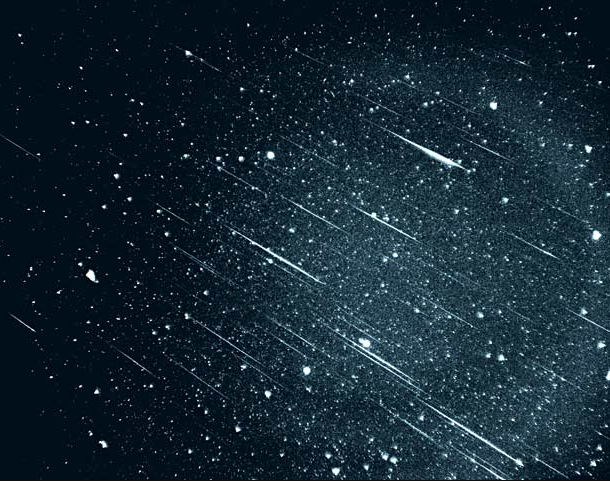 I feel awe-inspired when I look at this image. It makes me imagine being one of those tiny bright spots of light between the meteors, being incandescent but also surrounded by such brilliant beauty.

[font=tahoma]Art by , gifted by || Signature icon by MidnightShadow[/font]
Ravenclaw BitterLimeParakeet 15 points Keliora 15 points seashell 15 points ulalena 15 points
Slytherin Anne 15 points leafling19 15 points MerlinPendragon 15 points poppet 15
Hufflepuff gryphongrl 15 points sauvage Totally hilarious and true to Jona. I'd love to award points for it, but if it was a Hogwarts teacher, I doubt he'd get credit. SAMARITAN 15 points
Gryffindor charming 15 points Paddy 15 points
tallied